Nebraska · NE

ESA letter Nebraska: evaluation by a Nebraska-credentialed clinician, no waiting period, and your rights under Neb. Rev. Stat. § 20-319

Yes. No Nebraska statute sets a waiting period, session count or in-person rule for an ESA letter. Your housing right is the state Fair Housing Act's accommodation clause (Neb. Rev. Stat. § 20-319(2)(b)), which the Nebraska Supreme Court has applied to an emotional support dog. The clinician who evaluates you by video must hold a Nebraska DHHS credential (172 NAC 94-001). If you qualify, the signed PDF usually arrives within 24 to 48 hours. The price is $99.

0days

of waiting period: no relationship length, session count or in-person rule in any state statute

Neb. Rev. Stat. § 38-1,143(1)
14days

for the landlord to return your deposit with a written itemisation after you move out

Neb. Rev. Stat. § 76-1416(2)
1year

to file a charge with the Nebraska Equal Opportunity Commission

Neb. Rev. Stat. § 20-326(1)(a)(i)
2years

to sue in district court, with time during a commission hearing excluded

Neb. Rev. Stat. § 20-342(1)(a)

Nebraska, with the capital marked

Nebraska at a glance

The 7 things a renter in Nebraska needs to know.

Each answer is one line, with the section of Nebraska law it comes from. The detail is further down the page.

  1. 01

    Does Nebraska have an emotional support animal law?

    No. Nothing in the state code defines, protects or regulates emotional support animals, and the two bills that tried, LB553 in 2019 and LB309 in 2021, were both indefinitely postponed. Your housing right sits in the state Fair Housing Act instead (Neb. Rev. Stat. § 20-319(2)(b)). It makes refusing a reasonable accommodation in rules, policies, practices or services, where a person with a disability needs one to use and enjoy a dwelling, an act of discrimination. That clause has no training test. The Nebraska Supreme Court applied it to an emotional-support-dog request in Guenther v. Walnut Grove, 309 Neb. 655 (2021).

    Neb. Rev. Stat. § 20-319(2)(b); Guenther v. Walnut Grove, 309 Neb. 655 (2021)
  2. 02

    Is there a waiting period or a 30-day rule before an ESA letter?

    No. No statute or rule in this state sets a relationship length, a session count, an in-person meeting or an expiry date for the letter. The only such rule ever drafted, the "personal knowledge" test in LB309, died in April 2022. A credential holder "may establish a provider-patient relationship through telehealth" (Neb. Rev. Stat. § 38-1,143(1)), so one video evaluation can be enough if the clinician finds you qualify.

    Neb. Rev. Stat. § 38-1,143(1)
  3. 03

    Who can write my ESA letter, and do they need a Nebraska licence?

    No statute names a writer, so any licensed health professional's finding can support a request. The licence law is the real limit. Anyone providing mental health services to "a client present in Nebraska at the time of service", however delivered, "must hold a current appropriate credential that was issued by the Department" (172 NAC 94-001). The only cross-border exception in the Mental Health Practice Act is a Counseling Compact privilege (Neb. Rev. Stat. § 38-2121), and DHHS lists that compact's rules as still in progress. Psychologists may instead practise under PSYPACT, which the state has adopted (Neb. Rev. Stat. § 38-3901). Our letters for this state come from a clinician licensed in Nebraska, which is what the rule requires.

    172 NAC 94-001; Neb. Rev. Stat. § 38-2121; § 38-3901
  4. 04

    Can my landlord refuse my emotional support animal outright?

    Not without a ground the law allows. A landlord must consider a request for an accommodation in rules, policies, practices or services (Neb. Rev. Stat. § 20-319(2)(b)). It may turn down a tenancy that "would constitute a direct threat to the health or safety of other individuals" (Neb. Rev. Stat. § 20-319(8)). It may also refuse one that would cause "substantial physical damage to the property of others" (Neb. Rev. Stat. § 20-319(8)). The burden is yours. In Guenther v. Walnut Grove, 309 Neb. 655 (2021), the court required proof that the accommodation was "indispensable or essential" and said the tenant "has no right to her preferred means of accommodation".

    Neb. Rev. Stat. § 20-319(2)(b), (8); Guenther, 309 Neb. 655 (2021)
  5. 05

    Can my landlord charge a pet deposit or pet rent for my emotional support animal?

    State law does not forbid it. The no-extra-charge, no-deposit rule covers "a person with a disability who has a service animal", and a service animal is one "individually trained" (Neb. Rev. Stat. § 20-131.04; § 49-801(20)). For an untrained support animal you ask for the charge to be waived as part of the accommodation request under Neb. Rev. Stat. § 20-319(2)(b); no agency or court decision has tested that. Any pet deposit is capped at one-fourth of one month's rent, on top of a security deposit of no more than one month (Neb. Rev. Stat. § 76-1416(1)). Both come back with a written itemisation within 14 days of move-out (Neb. Rev. Stat. § 76-1416(2)).

    Neb. Rev. Stat. § 20-131.04; § 76-1416(1)–(2)
  6. 06

    Does my small landlord have to follow this?

    Almost always. The state Act exempts religious bodies, private clubs, housing for older persons and an owner who rents rooms "in his or her own home" (Neb. Rev. Stat. § 20-322). That last exemption is lost once the owner offers "more than four sleeping rooms" (Neb. Rev. Stat. § 20-322(3)). There is no exemption for an owner-occupied two-to-four-unit building and none for an owner of a few single-family houses. A duplex owner who lives downstairs must consider your request.

    Neb. Rev. Stat. § 20-322(3)
  7. 07

    Where do I complain, how long do I have, and what can I get?

    File with the Nebraska Equal Opportunity Commission within one year of the act (Neb. Rev. Stat. § 20-326(1)(a)(i)). The online inquiry is not a charge. The charge counts only once it is signed and notarised. A district-court suit is open for two years "whether or not a complaint has been filed", and the clock pauses while a commission hearing is pending (Neb. Rev. Stat. § 20-342(1)). The court may award actual damages, an injunction and attorney's fees (Neb. Rev. Stat. § 20-342(3)). After a hearing the commission may order actual damages and a civil penalty of up to 10,000 dollars, rising to 25,000 and 50,000 dollars for repeat landlords (Neb. Rev. Stat. § 20-337(3)).

    Neb. Rev. Stat. § 20-326(1)(a)(i); § 20-342; § 20-337(3)

Nebraska law

Nebraska has no ESA statute; your right is the accommodation clause in Neb. Rev. Stat. § 20-319(2)(b)

Nothing in the state code mentions emotional support animals by name. The 2019 bill (LB553) and the 2021 bill (LB309) that would have regulated them were both indefinitely postponed. So nothing says who may write a letter, what it must contain or how long it lasts. The Nebraska Fair Housing Act makes it discrimination to refuse "reasonable accommodations in rules, policies, practices, or services" a person with a disability needs to "use and enjoy a dwelling" (Neb. Rev. Stat. § 20-319(2)(b)). A no-pets clause is a rule; a pet-fee schedule is a policy. "Disability" takes the federal ADA meaning as of 1 January 2021 (Neb. Rev. Stat. § 20-308.01). The clause asks nothing about training. In Guenther v. Walnut Grove, 309 Neb. 655 (2021), the state Supreme Court applied it to an emotional-support-dog request and held that the tenant must prove the accommodation is reasonable and "indispensable or essential". A landlord may still refuse a tenancy that is a direct threat to others or would cause substantial property damage (Neb. Rev. Stat. § 20-319(8)). The exemptions stop at rooms rented inside the owner's own home (Neb. Rev. Stat. § 20-322(3)). Enforcement is the Nebraska Equal Opportunity Commission within one year (Neb. Rev. Stat. § 20-326(1)(a)(i)) or district court within two (Neb. Rev. Stat. § 20-342).

Source: Neb. Rev. Stat. § 20-319(2)(b) (Nebraska Fair Housing Act, § 20-301 to § 20-344; last amended 2021, LB540). This is general information, not legal advice.

ComplaintsNebraska Equal Opportunity Commission (NEOC) · (402) 471-2024 or toll-free (800) 642-6112 · signed, notarised charge within one year of the act (Neb. Rev. Stat. § 20-326(1)(a)(i)); district court within two years (Neb. Rev. Stat. § 20-342).PenaltyNo Nebraska offence covers a false emotional-support-animal claim or a general service-animal claim. The only misuse offence is a person who is not blind using a white cane or guide dog (Neb. Rev. Stat. § 28-1313). That is a Class III misdemeanor with a maximum of three months in jail or a 500-dollar fine (Neb. Rev. Stat. § 28-1313; § 28-106).

The federal Fair Housing Act still recognises the accommodation, and you can still enforce it in court. Since May 2026, HUD itself has stopped pursuing complaints about untrained emotional support animals, so in practice your protection comes from Nebraska law and the Nebraska Equal Opportunity Commission.

“when such accommodations may be necessary to afford the person with a disability equal opportunity to use and enjoy a dwelling”

Neb. Rev. Stat. § 20-319(2)(b)

Federal vs Nebraska

Where the federal Fair Housing Act stops and Nebraska law takes over.

TopicFederal (Fair Housing Act)Nebraska
Fees and depositsThe statute and its regulation (42 U.S.C. § 3604(f)(3)(B); 24 C.F.R. § 100.204) say nothing about pet fees or deposits. A waiver is part of what you ask for in the accommodation request.No statutory ban on pet fees or pet rent for an untrained support animal; the no-charge, no-deposit rule is for trained service animals (Neb. Rev. Stat. § 20-131.04). Any pet deposit is capped at one-fourth of a month's rent and returned, itemised, within 14 days (Neb. Rev. Stat. § 76-1416(1)–(2)).
DocumentationThe accommodation must be necessary because of a disability (42 U.S.C. § 3604(f)(3)(B)); no federal statute prescribes a letter format.No letter statute. A landlord may not make an "inquiry or record concerning" your disability when you apply (Neb. Rev. Stat. § 20-318(5)). Yet you carry the burden of proving disability, reasonableness and necessity (Guenther, 309 Neb. 655 (2021)), so a clear clinician's finding does the work.
TimingNo federal waiting period and no deadline for the landlord's answer.No waiting period, session count, validity period or response deadline in any statute; a credential holder may form the relationship by telehealth at the first visit (Neb. Rev. Stat. § 38-1,143(1)). If the landlord stalls, the one-year charge window is your backstop (Neb. Rev. Stat. § 20-326(1)(a)(i)).
Who may writeFederal law is silent on who writes the letter.No ESA statute names a writer, but DHHS requires a Nebraska credential for mental health services to a client located in the state, however delivered (172 NAC 94-001; Neb. Rev. Stat. § 38-2121). Psychologists may use PSYPACT instead (Neb. Rev. Stat. § 38-3901).
ExemptionsOwner-occupied buildings of up to four units, and single-family homes rented without a broker by an owner of three or fewer houses (42 U.S.C. § 3603(b)).Only rooms in the owner's own home, up to four sleeping rooms, plus religious, private-club and older-persons housing (Neb. Rev. Stat. § 20-322). No two-to-four-unit carve-out and no three-house carve-out.
Where to fileHUD, which since May 2026 finds cause only where the animal is trained, or a federal court.The Nebraska Equal Opportunity Commission, a HUD partner agency that dual-files qualifying charges; a Lincoln or Omaha address is referred to the approved local agency first (Neb. Rev. Stat. § 20-332). Or district court directly, with no commission filing needed (Neb. Rev. Stat. § 20-342(1)(b)).
DeadlineOne year to complain to HUD (42 U.S.C. § 3610(a)(1)(A)(i)); two years to sue (42 U.S.C. § 3613(a)(1)(A)).One year to the commission (Neb. Rev. Stat. § 20-326(1)(a)(i)); two years to district court, with time during a commission hearing excluded (Neb. Rev. Stat. § 20-342(1)(a)).

Swipe sideways to see the whole table.

Your timeline in Nebraska

What actually happens, and when.

No statute in this state makes you wait. There is no relationship minimum, no session count, no in-person rule and no validity period, so the pace is set by the clinical evaluation and nothing else (Neb. Rev. Stat. § 38-1,143(1)). The screening is free with no card. You pay at checkout before the consultation.

Step 1

A free screening with no card. It asks where you live, what animal you have and why you are seeking the letter. It decides nothing; it tells you whether a consultation makes sense. It also confirms you will be in Nebraska for the call, because your location at the time of service is what triggers the credential rule (172 NAC 94-001).

Step 2

A live video consultation with a clinician licensed in Nebraska. State law lets a credential holder "establish a provider-patient relationship through telehealth" (Neb. Rev. Stat. § 38-1,143(1)). You give signed informed consent first, which the DHHS practice rule requires in the record (172 NAC 94-013). The clinician decides whether you have a disability as the state defines it and whether the animal is needed for equal use and enjoyment of your home. Not everyone qualifies.

Step 3

If you qualify, your signed PDF usually arrives within 24 to 48 hours of the consultation. It carries the clinician's Nebraska credential type and number, the consultation date and mode, and the finding of disability and need, so a landlord can check it on the DHHS licence look-up. If you do not qualify, request a full refund within 7 days.

Housing

What your Nebraska landlord may and may not do.

Under the federal Fair Housing Act (42 U.S.C. § 3604(f)(3)(B)) and Nebraska's own fair-housing law, a housing provider must consider a reasonable-accommodation request for an assistance animal, including where pets are prohibited. Each line below carries the section it comes from.

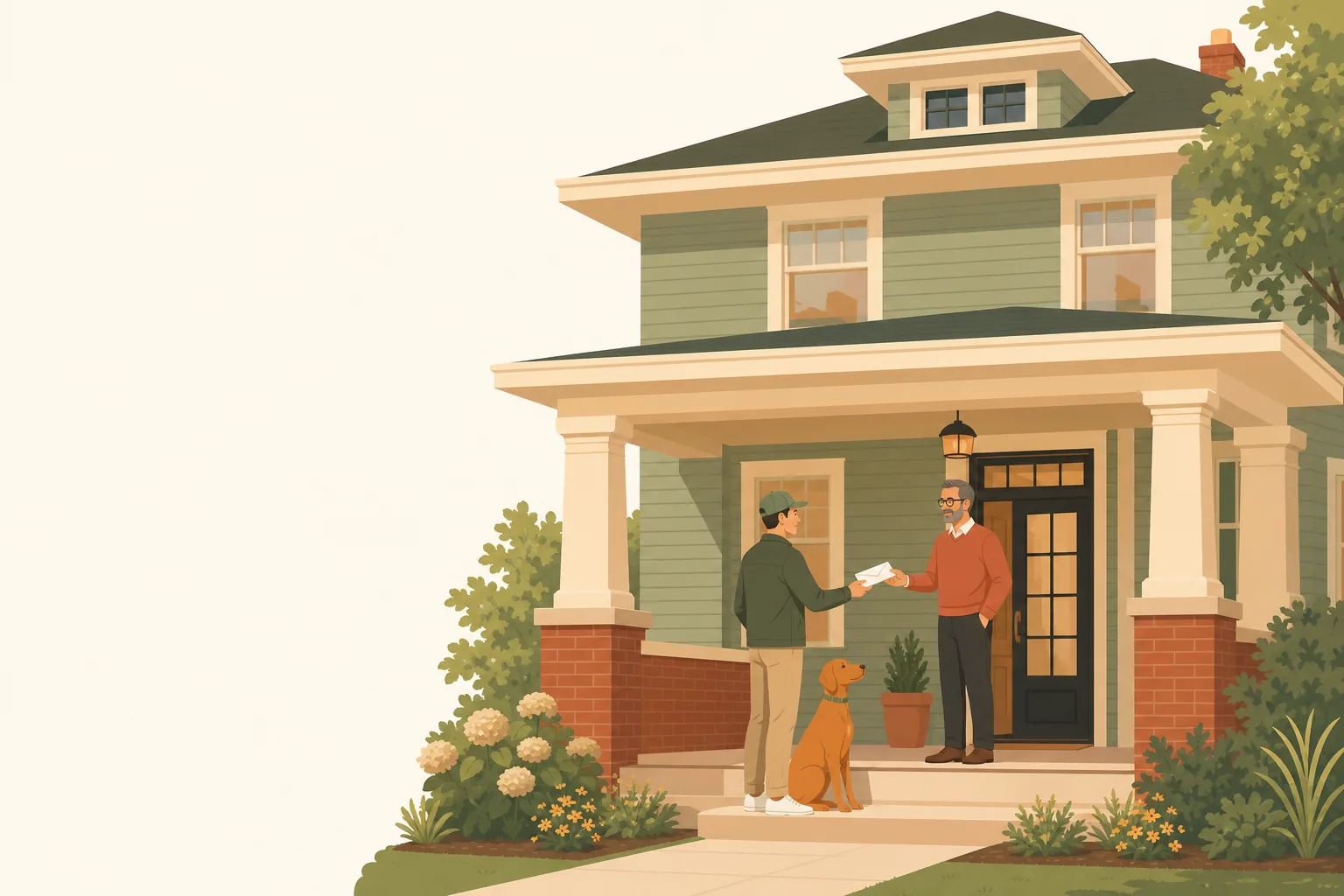
Illustration of a renter handing a letter to a landlord at the door of a Nebraska home, a small dog at their feet

What they may do

Your landlord may

  • Ask for information showing your disability-related need where neither is obvious, because you bear the burden of proving disability, reasonableness and necessity. Guenther v. Walnut Grove, 309 Neb. 655 (2021); Neb. Rev. Stat. § 20-319(2)(b)
  • Refuse a tenancy that "would constitute a direct threat to the health or safety of other individuals" or would cause "substantial physical damage to the property of others". Neb. Rev. Stat. § 20-319(8)
  • Offer a different accommodation that works, since the tenant "has no right to her preferred means of accommodation". Guenther, 309 Neb. 655 (2021)
  • Take a pet deposit of up to one-fourth of one month's rent for an untrained support animal unless a waiver is agreed. Deduct actual damage from it with a written itemisation. Neb. Rev. Stat. § 76-1416(1)–(2)
  • Rent rooms inside their own home, up to four sleeping rooms, outside the state fair-housing law entirely, for any reason or none. Neb. Rev. Stat. § 20-322(3)

What they may not do

Your landlord may not

  • Refuse to consider, or refuse to make, a reasonable accommodation "in rules, policies, practices, or services" you need for equal use and enjoyment of the home. Neb. Rev. Stat. § 20-319(2)(b)
  • Make any "written or oral inquiry or record concerning" your disability when you apply to rent. Neb. Rev. Stat. § 20-318(5)
  • Charge "extra compensation" or "an additional deposit" for a trained service animal, whatever its species. Neb. Rev. Stat. § 20-131.04; § 49-801(20)
  • Demand a security deposit above one month's rent or a pet deposit above one-fourth of a month's rent. Or sit on your refund past 14 days after you leave. Neb. Rev. Stat. § 76-1416(1)–(2)
  • Coerce, intimidate, threaten or interfere with you for asserting fair-housing rights; that is a Class I misdemeanor carrying up to a year in jail or a 1,000-dollar fine. Neb. Rev. Stat. § 20-344; § 28-106

Illustrative exchange

What a lawful conversation looks like.

Most refusals are not a flat no. They are a question the housing provider is not allowed to ask, or a fee they are not allowed to charge. Here is the shape of a typical exchange in Nebraska, with the rule beside each reply.

A made-up exchange to show the rules, not a real tenant or landlord.

Pet fees and deposits

No statute in this state bans a pet fee, pet rent or a pet deposit for an emotional support animal. The one no-charge rule says a "person with a disability who has a service animal" shall not pay "extra compensation" or "an additional deposit" (Neb. Rev. Stat. § 20-131.04). And "service animal" means an animal "individually trained" (Neb. Rev. Stat. § 49-801(20)). A task-trained animal of any species is covered; an untrained support animal is not. What you can do is ask for the charge to be waived as part of your accommodation request, because a pet-fee schedule is a "policy" within Neb. Rev. Stat. § 20-319(2)(b). No commission or court decision has tested that for an emotional support animal, so treat the waiver as something you request rather than something you already hold. The state does cap the money. A security deposit "however denominated" may not exceed one month's rent, and a pet deposit may be added only up to "one-fourth of one month's periodic rent" (Neb. Rev. Stat. § 76-1416(1)). The balance and "a written itemization" must be "delivered or mailed to the tenant within fourteen days" after the tenancy ends (Neb. Rev. Stat. § 76-1416(2)). A landlord who withholds it wilfully and in bad faith owes the lesser of one month's rent or twice the deposit, plus costs and attorney's fees (Neb. Rev. Stat. § 76-1416(3)). Monthly pet rent is not regulated by any statute we found. The ordinary local dog-licence tax also applies to a support animal, because only service animals are exempt from it (Neb. Rev. Stat. § 54-603(2)).

Small landlords

Neb. Rev. Stat. § 20-322 lists every exemption, and none of them is the federal four-unit or three-house rule. Religious organisations, private clubs and housing for older persons are carved out for their own purposes (Neb. Rev. Stat. § 20-322). A person may also "refuse to rent a room or rooms in his or her own home for any reason or for no reason" (Neb. Rev. Stat. § 20-322(3)). That exemption ends once they make available "more than four sleeping rooms" within that home (Neb. Rev. Stat. § 20-322(3)). Nothing exempts an owner-occupied duplex, triplex or fourplex. Nothing exempts an owner who rents out one or two single-family houses either. Those landlords must consider a request under Neb. Rev. Stat. § 20-319(2)(b). The commission's own housing-law page describes the room threshold as three sleeping rooms; the statute says four, and the statute controls (Neb. Rev. Stat. § 20-322(3)). One caution about a different law. The trained-service-animal housing rule excludes "any single-family residence in which the owner lives and in which any room is rented" (Neb. Rev. Stat. § 20-131.02). That narrower rule concerns trained service animals and does not shrink the fair-housing clause.

If your landlord says no

Nebraska Equal Opportunity Commission

Phone: (402) 471-2024 (Toll-free (800) 642-6112 · Omaha office (402) 595-2028 · Scottsbluff office (308) 632-1340) · File a complaint

Deadline: One year from the act or the day it ended (Neb. Rev. Stat. § 20-326(1)(a)(i)). Start with the online inquiry on the commission's contact page; the inquiry "is not a formal charge". An intake investigator follows up, and the charge is filed only when the commission receives it signed and notarised. Complaints and answers are under oath (Neb. Rev. Stat. § 20-326(1)(d)). Offices sit in Lincoln, Omaha and Scottsbluff.

Court: A district-court suit is open for two years from the act, time during a commission hearing excluded (Neb. Rev. Stat. § 20-342(1)). You may sue "whether or not a complaint has been filed" (Neb. Rev. Stat. § 20-342(1)). The court may award actual damages, a temporary or permanent injunction and, to the prevailing party, reasonable attorney's fees and costs (Neb. Rev. Stat. § 20-342(3)). The section says nothing about punitive damages (Neb. Rev. Stat. § 20-342(3)). Filing suit stops the commission from issuing a charge on the same facts (Neb. Rev. Stat. § 20-333(1)(d)). A federal suit is open for two years (42 U.S.C. § 3613(a)(1)(A)).

Retaliation: Coercing, intimidating, threatening or interfering with anyone for exercising fair-housing rights is a Class I misdemeanor (Neb. Rev. Stat. § 20-344). The penalty is up to one year in jail or a 1,000-dollar fine or both (Neb. Rev. Stat. § 28-106). Point to Neb. Rev. Stat. § 20-344 rather than to the lease.

The commission is HUD's Fair Housing Assistance Program partner for the state and dual-files qualifying housing charges. It must first refer a complaint inside an approved local agency's area to that agency (Neb. Rev. Stat. § 20-332). HUD lists the Lincoln Commission on Human Rights and the Omaha Human Rights and Relations Department. The commission has published nothing specific to untrained support animals, so a cause finding cannot be promised; the court route under Neb. Rev. Stat. § 20-342 does not depend on it. County attorneys may also enforce the state law (Neb. Rev. Stat. § 20-139).

Illustration of a signed letter on letterhead with an envelope, a pen, a key and a calendar

Your envelope, item by item

  • A short written request
  • The clinician's finding
  • What the law does not ask for
  • What to expect back

Keep a dated copy of everything you send.

What to send your landlord

The request, the letter, and what happens next.

  1. 1

    A short written request

    Three or four sentences, dated. Say you have a disability and that your animal supports you at home. Then ask for a reasonable accommodation to the no-pets rule or the pet-fee policy under Neb. Rev. Stat. § 20-319(2)(b). Name the animal and its species. If you want the pet charge waived, ask for that in the same request. Keep a copy.

  2. 2

    The clinician's finding

    The signed letter from a clinician licensed in Nebraska. It shows the credential type and number a landlord can check on the DHHS licence look-up, plus the date and mode of the consultation. It records a finding that you have a disability and need the animal for equal use and enjoyment of the dwelling. No diagnosis, no records. The state sets no required wording and no expiry date.

  3. 3

    What the law does not ask for

    No registry entry, ID card, certificate or vest exists in state law for a support animal. The only animal definition on the books is for a trained service animal (Neb. Rev. Stat. § 49-801(20)). A landlord may not make an "inquiry or record concerning" your disability when you apply (Neb. Rev. Stat. § 20-318(5)). A demand for your diagnosis or medical file goes beyond the finding you have supplied.

  4. 4

    What to expect back

    No statute sets a response deadline or requires a written decision, so ask for an answer in writing within a reasonable time. If the answer is no, or the pet deposit exceeds one-fourth of a month's rent (Neb. Rev. Stat. § 76-1416(1)), note the date. The one-year commission clock runs from it (Neb. Rev. Stat. § 20-326(1)(a)(i)). If the landlord offers an alternative, engage with it, because the court looks for necessity, not preference (Guenther, 309 Neb. 655 (2021)).

If your housing provider questions the letter, your clinician responds directly at no extra cost.

Nebraska renters by city

The same rules from Omaha to Norfolk.

The rules are the same in Omaha, Lincoln, Bellevue, Grand Island, Kearney, Fremont, Hastings and Norfolk, because the housing right is a state statute and one state agency enforces it. The Nebraska Equal Opportunity Commission takes charges from any address in the state within one year (Neb. Rev. Stat. § 20-326(1)(a)(i)). Its Lincoln office answers on (402) 471-2024, its Omaha office on (402) 595-2028, and the toll-free line is (800) 642-6112. Two cities add a local route. A Lincoln address goes first to the Lincoln Commission on Human Rights (Neb. Rev. Stat. § 20-332). An Omaha address goes to the Omaha Human Rights and Relations Department; both are on HUD's partner list (Neb. Rev. Stat. § 20-332). Our consultations are by video with a clinician licensed in Nebraska, so a renter in Kearney follows the same path as one in Bellevue. That path is a free screening, one live consultation, and if you qualify a signed PDF that usually arrives within 24 to 48 hours. No city has an ordinance on support animals, and the local dog-licence tax still applies to one, since only service animals are exempt (Neb. Rev. Stat. § 54-603(2)). Students in campus housing at the University of Nebraska–Lincoln, Nebraska Wesleyan or Creighton use each school's own request form and timetable, so ask the disability services office well before move-in. North Platte, Papillion, Columbus and Scottsbluff follow the statewide rules.

  • Omaha
  • Lincoln
  • Bellevue
  • Grand Island
  • Kearney
  • Fremont
  • Hastings
  • Norfolk
  • Omaha Omaha has its own Human Rights and Relations Department, which HUD lists as a Fair Housing Assistance Program partner at 1819 Farnam Street, Suite 502, (402) 444-5055, covering housing, employment and public accommodation. Its filing deadline could not be verified, so work to the state's one-year window (Neb. Rev. Stat. § 20-326(1)(a)(i)). The state commission's Omaha office, 1313 Farnam-on-the-Mall, Suite 318, (402) 595-2028, is a second door on the same street.
  • Lincoln Renters inside Lincoln city limits have a local route as well. The Lincoln Commission on Human Rights, 555 S 10th Street, Suite 304, (402) 441-7624, takes housing complaints, disability included, within one year of the last act. It investigates only addresses inside the city, starts by phone or with its intake questionnaire, and the formal complaint must be in writing and signed before a notary. The state commission refers a Lincoln complaint there first (Neb. Rev. Stat. § 20-332), and the two-year court window runs alongside (Neb. Rev. Stat. § 20-342).

Myths in Nebraska

Three things you will read elsewhere that are not Nebraska law.

Myth

Nebraska has no ESA law, so only the federal Fair Housing Act protects you, and small landlords are exempt anyway.

Fact

Half right, half wrong. There is no ESA statute, but the state fair-housing law has its own accommodation clause with no training test (Neb. Rev. Stat. § 20-319(2)(b)). It has its own agency with a one-year window (Neb. Rev. Stat. § 20-326) and a two-year court claim (Neb. Rev. Stat. § 20-342). And the Supreme Court has applied the clause to emotional support dogs (Guenther, 309 Neb. 655 (2021)). Its only small-landlord exemption is rooms rented inside the owner's own home (Neb. Rev. Stat. § 20-322(3)); the owner-occupied fourplex and the single rental house are covered.

Myth

Faking an ESA in Nebraska is a crime under Neb. Rev. Stat. § 20-127, with up to 1,000 dollars and six months in jail.

Fact

No. Neb. Rev. Stat. § 20-127 is a rights section with no penalty in it. The state has no offence for misrepresenting an emotional support animal and none for misrepresenting a service animal generally. The only misuse offence is a person who is not blind using a white cane or guide dog (Neb. Rev. Stat. § 28-1313). That is a Class III misdemeanor with a maximum of three months or a 500-dollar fine (Neb. Rev. Stat. § 28-106). The six-months figure is the second-offence penalty in LB309, a 2021 bill that was indefinitely postponed on 20 April 2022 and never became law. An ESA should still never be presented as a trained service animal.

Myth

A Nebraska ESA letter means no pet deposit and no pet rent.

Fact

Not in this state. No statute bars pet charges for an untrained support animal. The no-charge, no-deposit rule applies to a "person with a disability who has a service animal", meaning an animal "individually trained" (Neb. Rev. Stat. § 20-131.04; § 49-801(20)). You can ask for a waiver as part of the accommodation request under Neb. Rev. Stat. § 20-319(2)(b). What the statute does fix is the ceiling: a pet deposit of no more than one-fourth of a month's rent, returned with an itemisation within 14 days (Neb. Rev. Stat. § 76-1416(1)–(2)).

Task-trained dogs are a different document. If your dog performs trained tasks for a psychiatric disability, read about the psychiatric service dog (PSD) letter online, written after a real consultation.

Same price in every state

ESA + PSD combination

$149 one time

Both letters from one course of care, including the consultations for each.

  • Everything in the housing letter
  • Psychiatric service dog letter included
  • Both consultations with a licensed clinician
  • One clinical record, two documents
Start free screening

PSD letter & consultation

$79 one time

For people who already have housing sorted and need psychiatric service dog documentation only.

  • Live consultation with a licensed clinician
  • Psychiatric service dog letter
  • Disability-related task documented
  • No housing letter included
Start free screening

Signed PDF within 24 to 48 hours of your consultation. Same-day evaluations are often available for early bookings. Read the guarantee and refund terms.

Why this letter holds up

Written to Nebraska's rules, by a clinician a landlord can check.

Illustration of a renter on a video consultation with a clinician, a cat asleep on the desk
Every letter follows a live video or phone consultation with a clinician licensed in Nebraska.
  • The clinician. A clinician licensed in Nebraska evaluates you in a live video or phone consultation. Clinical review of this page: Darren Rafel, LCSW.
  • What the letter contains. Confirmation of a disability-related need for your animal, the animal it covers, and the clinician's licence type, number, jurisdiction and effective date, signed on letterhead. No diagnosis.
  • How a landlord verifies it. The licence number is checked against the state licensing board; if they ask us, the clinician confirms the letter is genuine without disclosing anything else.

The refund terms, in full

  • If you do not qualify. If the licensed clinician determines after your assessment that you do not meet the clinical criteria for an ESA or PSD letter, the assessment and letter fee is refunded in full. Requests must be made within 7 days of being notified that you did not qualify. The clinician's clinical determination is final.
  • If your housing provider refuses the letter. If your landlord, property manager or housing authority refuses to accept the letter, you get a full refund. Contact us within 30 days of receiving your letter with the written denial (or reasonable evidence of the refusal), your full name and the letter's issue date. We first apply complimentary landlord verification support and contact the housing provider on your behalf; if the refusal stands, the refund is issued.

Read the exact terms. Money-back guarantee: full refund if you do not qualify, and a full refund if your housing provider refuses the letter.

What clients say

★★★★★

I had a really positive experience from start to finish. The process was smooth, and I felt comfortable sharing everything without feeling rushed or judged. The questions were straightforward and easy to answer, and I really appreciated how respectful and understanding everyone was throughout the process. Having the opportunity to speak with a licensed professional afterward was also very helpful and added a lot of value to the experience. Overall, I’m very satisfied with the service

Hamza Khalid · Trustpilot, 2026-09

★★★★★

Great service!! 5 stars hands down!

Jen Khan · Trustpilot, 2026-09

Read all Pet Support Letter reviews on Trustpilot. We show our own reviews only, word for word.

What is on every Pet Support Letter: the items a housing provider can check.

Nebraska FAQ

Nebraska questions, answered from the statute.

What qualifies you to get an ESA letter?

A disability as the state defines it: the federal ADA meaning as of 1 January 2021, a physical or mental impairment that substantially limits a major life activity (Neb. Rev. Stat. § 20-308.01). A diagnosis on its own does not establish that. The clinician must also find that the animal is needed for equal use and enjoyment of your home (Neb. Rev. Stat. § 20-319(2)(b)). Only a clinician licensed in Nebraska can make that finding, and not everyone qualifies.

How to get a legitimate ESA letter?

Book a live video consultation with a clinician who holds a Nebraska DHHS credential. DHHS requires one for mental health services to "a client present in Nebraska at the time of service", however delivered (172 NAC 94-001). If you qualify, the clinician writes a finding showing the credential number, the date and the need. The evaluation costs $99, paid at checkout before the consultation. If you do not qualify, request a full refund within 7 days.

Are any online ESA letters legit?

Yes, when three things are true. The clinician holds a Nebraska credential or, for a psychologist, PSYPACT authority (172 NAC 94-001; Neb. Rev. Stat. § 38-3901). The consultation is a real assessment, which state law allows by telehealth (Neb. Rev. Stat. § 38-1,143(1)). And the letter is a finding, not a download: a template, registry card or "certificate" bought online gives a landlord nothing to act on. Ours meet all three.

Can I just ask my doctor for an ESA letter?

Yes, if your doctor holds a Nebraska credential and is willing to make the finding. No statute names who may write the letter. A physician, physician assistant, nurse practitioner, psychologist or licensed mental health practitioner can do it within scope, and the credential rule applies to them too (172 NAC 94-001). Ask at your next visit. If your doctor declines, a clinician licensed in Nebraska can evaluate you by video (Neb. Rev. Stat. § 38-1,143(1)).

Do landlords actually verify ESA letters?

Some do, and what they can check is the writer's credential on the DHHS look-up, so ours shows the credential type and number. No statute sets letter wording, a validity period or a renewal rule; "valid for 12 months" is a vendor habit, not law. If a landlord questions the letter, the clinician confirms it as part of the verification support included in the price. A landlord may not record an "inquiry" into the disability (Neb. Rev. Stat. § 20-318(5)).

Why would an ESA letter be denied?

Lawfully, on two grounds (Neb. Rev. Stat. § 20-319(8)). Your tenancy would be "a direct threat to the health or safety of other individuals", or it would cause "substantial physical damage to the property of others" (Neb. Rev. Stat. § 20-319(8)). A request also fails without proof of necessity; in Guenther, 309 Neb. 655 (2021), the court required the accommodation to be "indispensable or essential". A no-pets rule is not a ground. If refused, you have one year to file (Neb. Rev. Stat. § 20-326(1)(a)(i)).

How much does an ESA letter cost in Nebraska?

$99 for a housing letter, $149 together with a psychiatric service dog letter, or $79 for a PSD letter and consultation on its own. The consultation and landlord verification support are included, and the price is the same across every state.


Sources

Every legal statement on this page, and where it comes from.

  1. Neb. Rev. Stat. § 20-319 (Nebraska Fair Housing Act: reasonable accommodation; direct-threat and damage clause) accessed 2026-10-13
  2. Neb. Rev. Stat. § 20-322 (exemptions; rooms in the owner's own home) accessed 2026-10-13
  3. Neb. Rev. Stat. § 20-326 (charge to the Equal Opportunity Commission within one year; complaints under oath) accessed 2026-10-13
  4. Neb. Rev. Stat. § 20-342 (civil action within two years; actual damages, injunction, attorney's fees) accessed 2026-10-13
  5. Neb. Rev. Stat. § 20-344 (coercion, intimidation, threats or interference; Class I misdemeanor) accessed 2026-10-13
  6. Neb. Rev. Stat. chapter 20 index (§ 20-127, § 20-131.02, § 20-139, § 20-308.01, § 20-318, § 20-332, § 20-333, § 20-337: public access, service-animal housing definitions, administration, disability defined, unlawful inquiries, local referral, cause determination, administrative remedies) accessed 2026-10-13
  7. Neb. Rev. Stat. § 20-131.04 (service animals in housing: no extra compensation, no additional deposit) accessed 2026-10-13
  8. Neb. Rev. Stat. § 49-801(20) (service animal defined by reference to the 2008 federal regulation) accessed 2026-10-13
  9. Neb. Rev. Stat. chapter 28 index (§ 28-1313 unlawful use of a white cane or guide dog; § 28-106 misdemeanor penalties) accessed 2026-10-13
  10. Neb. Rev. Stat. § 76-1416 (security deposit cap; pet deposit of one-fourth of a month's rent; 14-day return; bad-faith damages) accessed 2026-10-13
  11. Neb. Rev. Stat. § 54-603 (local dog-licence tax; service animals exempt) accessed 2026-10-13
  12. Neb. Rev. Stat. § 38-2121 (Mental Health Practice Act: licence required; exceptions; Counseling Compact privilege) accessed 2026-10-13
  13. Neb. Rev. Stat. § 38-1,143 (credential holder may establish a provider-patient relationship through telehealth) accessed 2026-10-13
  14. Neb. Rev. Stat. § 38-3901 (Psychology Interjurisdictional Compact adopted) accessed 2026-10-13
  15. 172 NAC 94-001 (DHHS: Nebraska credential required for mental health services to a client present in the state, however delivered) accessed 2026-10-13
  16. 172 NAC 94-013 (DHHS: unprofessional conduct; signed informed consent and records) accessed 2026-10-13
  17. LB309 (107th Legislature, 2021), Assistance Animal Integrity in Housing Act — indefinitely postponed 20 April 2022; LB553 (2019) likewise postponed accessed 2026-10-13
  18. Guenther v. Walnut Grove Hillside Condominium Regime No. 3, Inc., 309 Neb. 655 (2021) accessed 2026-10-13
  19. Nebraska Equal Opportunity Commission, complaint process (housing deadline one year; dual filing with HUD) accessed 2026-10-13
  20. Nebraska Equal Opportunity Commission, contact page (offices, phones, online inquiry; charge must be signed and notarised) accessed 2026-10-13
  21. Nebraska DHHS, Mental Health and Social Work Practice licensure (LIMHP and LMHP; reciprocity; compact status) accessed 2026-10-13
  22. Lincoln Commission on Human Rights, filing a discrimination complaint (one year; city limits; notarised complaint) accessed 2026-10-13
  23. HUD list of Fair Housing Assistance Program agencies (NEOC; Lincoln and Omaha local agencies) accessed 2026-10-13
  24. HUD FHEO enforcement memorandum, 22 May 2026 accessed 2026-10-13
  25. 42 U.S.C. § 3603(b), § 3604(f)(3)(B), § 3610, § 3613 (Fair Housing Act: exemptions; reasonable accommodation; HUD complaint; civil action) accessed 2026-10-13

General information, not legal advice. Last reviewed 2026-10-13 by Darren Rafel, LCSW. Statutes change; we re-check each state page and record the date above.

Check if you qualify in Nebraska.

Two-minute screening, confidential, no card. You will see your exact state timeline before anything is charged.

Start the free screening HIPAA-compliant intake · Licensed clinicians · Money-back guarantee: full refund if you do not qualify, and a full refund if your housing provider refuses the letter.