




Step 1
A free screening, no card needed. It covers where you live, your animal and what you need the letter for. It does not decide anything; it tells you whether a consultation is worth your time.
North Carolina · NC
Yes. North Carolina has no ESA statute and no waiting period. Your housing right is the State Fair Housing Act's duty to make reasonable accommodations (G.S. § 41A-4(f)(2)), with no single-family exemption. Your video clinician must hold a North Carolina licence (G.S. § 90B-4(b)). A landlord may still charge a reasonable pet fee unless you win a waiver (G.S. § 42-53). If you qualify, the signed PDF usually arrives within 24 to 48 hours. The price is $99.
to file with the North Carolina Human Relations Commission from the day the practice occurred
N.C. Gen. Stat. § 41A-7(b)or fewer in an owner-occupied building: the only building exemption; no single-family carve-out
N.C. Gen. Stat. § 41A-6(a)(1)for the landlord to return your deposit with an itemised accounting after move-out
N.C. Gen. Stat. § 42-52maximum fine for disguising an animal as a service animal, a Class 3 misdemeanor
N.C. Gen. Stat. § 168-4.5; § 15A-1340.23(b)North Carolina, with the capital marked
North Carolina at a glance
Each answer is one line, with the section of North Carolina law it comes from. The detail is further down the page.
No. The words "emotional support" appear nowhere in the fair-housing, landlord-tenant or disability chapters, and the two House bills that tried to add them, H796 in 2019 and H551 in 2023, died in the Senate Rules Committee. Your right is the State Fair Housing Act's duty to make reasonable accommodations in rules, policies, practices or services (G.S. § 41A-4(f)(2)). It mirrors the federal clause and has no training test.
N.C. Gen. Stat. § 41A-4(f)(2)No. No statute or board rule sets a minimum relationship length, a session count, an in-person meeting, a validity period or a renewal cycle. What the licensing boards require is a genuine evaluation by a clinician licensed here, with informed consent and a crisis plan (G.S. § 90B-4(b); § 90-331). One live consultation can be enough if the clinician finds you qualify.
N.C. Gen. Stat. § 90B-4(b); § 90-331Any health professional licensed in the state who actually evaluates you, because every board locates the practice where the client sits during the call (G.S. § 90B-4(b); § 90-331). A social worker or counsellor licensed only elsewhere cannot rely on a compact yet: the counselling and social-work compacts are enacted but issue no privileges here today. Psychologists with PSYPACT authority are the one live exception.
N.C. Gen. Stat. § 90B-4(b); NCBLCMHC Distance Counseling policyYes, unless you win a waiver. The landlord may charge a reasonable, nonrefundable fee for pets, with no cap and no ESA exception (G.S. § 42-53). Ask in writing for the charge to be waived as a reasonable accommodation. Any refundable deposit counts inside the security-deposit cap and must come back, itemised, within 30 days of move-out (G.S. §§ 42-51(b), 42-52).
N.C. Gen. Stat. §§ 42-53, 42-51(b), 42-52Usually, yes. The state exempts only an owner-occupied building of up to four families and a room in the private house where the owner lives. The single-family-house exemption was repealed in 1990, so a landlord the federal Act lets off is still covered here (G.S. § 41A-6(a)).
N.C. Gen. Stat. § 41A-6(a)The North Carolina Human Relations Commission, inside the Office of Administrative Hearings in Raleigh, within one year of the practice (G.S. § 41A-7(b)). The online inquiry form is not a complaint; a complaint is written and verified. A state-court suit needs a right-to-sue letter, which you can request 130 days after filing, and must be brought within one year of that letter, with punitive damages and attorney's fees available (G.S. § 41A-7(i), (j)).
N.C. Gen. Stat. § 41A-7(b), (i), (j)An ESA has no public-access right; that right belongs to an animal trained to assist with a specific disability (G.S. § 168-4.2(a)). There is no ESA offence, but disguising an animal as a service animal is a Class 3 misdemeanor with a fine of up to 200 dollars and, for most first-time defendants, a fine only (G.S. § 168-4.5; § 15A-1340.23). Never call an untrained animal a service animal.
N.C. Gen. Stat. §§ 168-4.2(a), 168-4.5; § 15A-1340.23North Carolina law
No North Carolina statute names emotional support animals, and the House bills that tried to create one died in the Senate in 2019 and 2023 (H796; H551). Your housing right comes instead from the State Fair Housing Act (G.S. ch. 41A). It is unlawful for a landlord to refuse reasonable accommodations in rules, policies, practices or services when they may be necessary for a person with a handicapping condition to have equal use and enjoyment of a dwelling (G.S. § 41A-4(f)(2)). The clause has no training test, so it reaches an untrained support animal. A handicapping condition means a physical or mental impairment that substantially limits one or more major life activities (G.S. § 41A-3(3a)); a diagnosis on its own is not enough. Your landlord must consider the request. A refusal must stand on a ground the statute names, such as a tenancy that would be a direct threat to the health or safety of others or would cause substantial physical damage to their property (G.S. § 41A-6(b)). The exemptions are narrow: an owner-occupied building of up to four families and a room in the owner's own house. There is no single-family-house exemption (G.S. § 41A-6(a)). The North Carolina Human Relations Commission enforces the Act, and the filing window is one year (G.S. § 41A-7(b)).
Source: N.C. Gen. Stat. § 41A-4(f)(2) (State Fair Housing Act, ch. 41A; last amended 2009). This is general information, not legal advice.
The federal Fair Housing Act still recognises the accommodation, and you can still enforce it in court. Since May 2026, HUD itself has stopped pursuing complaints about untrained emotional support animals, so in practice your protection comes from North Carolina law and the North Carolina Human Relations Commission.
“necessary to a handicapped person's equal use and enjoyment of a dwelling”
Federal vs North Carolina
| Topic | Federal (Fair Housing Act) | North Carolina |
|---|---|---|
| Fees and deposits | Neither the Fair Housing Act nor 24 C.F.R. § 100.204 says a word about fees. HUD's no-fee guidance was withdrawn on 17 September 2025, which leaves a fee waiver as one item in your accommodation request. | A reasonable, nonrefundable pet fee is expressly allowed, with no ESA exception (G.S. § 42-53). The no-charge rule covers trained service animals only (G.S. §§ 168-4.4, 168-4.5). A refundable deposit sits inside the cap and comes back, itemised, within 30 days (G.S. §§ 42-51(b), 42-52). |
| Documentation | Federal law asks only that the accommodation be necessary because of a disability (42 U.S.C. § 3604(f)(3)(B)); it prescribes no letter wording. | No statutory letter format, validity period or verification rule. When the condition and the need are not obvious, a landlord may ask for reliable information that you have a handicapping condition and need the animal (G.S. §§ 41A-3(3a), 41A-4(f)(2)). |
| Timing | Nothing federal sets a waiting period or a response deadline. | No waiting period, session count or in-person rule for the clinician, and no statutory deadline for the landlord's answer. If the landlord goes quiet, remember that the one-year filing clock with the Commission keeps running (G.S. § 41A-7(b)). |
| Who may write | The federal Act is silent on who writes the letter (42 U.S.C. § 3604(f)(3)(B)). | No ESA statute says either, so the licensing rules of each profession answer it. A clinician who evaluates you by video while you are in the state is practising here and needs a North Carolina licence for their profession (G.S. § 90B-4(b); § 90-331). Only PSYPACT psychologists hold a live compact privilege; the counselling and social-work compacts issue none here yet. |
| Exemptions | An owner-occupied building of up to four units, and a single-family house sold or rented by an owner of no more than three without a broker (42 U.S.C. § 3603(b)). | Only an owner-occupied building of up to four families and a room in the owner's own private house. The single-family carve-out was repealed in 1990 (G.S. § 41A-6(a)). |
| Where to file | A HUD complaint, which since May 2026 goes forward only for a trained animal, or a federal-court suit. | The North Carolina Human Relations Commission in the OAH Civil Rights Division, a HUD Fair Housing Assistance Program agency, or a local agency in Charlotte-Mecklenburg, Durham, Greensboro, Orange County or Winston-Salem (G.S. § 41A-7(c)). A state-court suit comes only after a right-to-sue letter (G.S. § 41A-7(i)). |
| Deadline | HUD complaint within one year (42 U.S.C. § 3610); civil suit within two years (42 U.S.C. § 3613(a)(1)(A)). | One year to the Commission from when the practice occurred (G.S. § 41A-7(b)); a state-court suit within one year of the right-to-sue letter (G.S. § 41A-7(j)). The federal two-year suit stays open regardless. |
Swipe sideways to see the whole table.
Your timeline in North Carolina
Nothing in North Carolina law makes you wait, and no NC licensing board sets a session count or an in-person rule. What the boards do require is a real evaluation by a clinician licensed here, with informed consent and a crisis plan; a questionnaire on its own does not meet that standard. Payment is taken at checkout before the consultation; the screening that comes first is free and asks for no card.
A free screening, no card needed. It covers where you live, your animal and what you need the letter for. It does not decide anything; it tells you whether a consultation is worth your time.
A live video or phone consultation with a clinician licensed in North Carolina, because every board here treats a session with a client located in the state as practice in the state (G.S. § 90B-4(b); § 90-331). The clinician decides whether you have a condition that substantially limits a major life activity and whether the animal meets a disability-related need. Not everyone qualifies.
If you qualify, your signed PDF usually arrives within 24 to 48 hours of the consultation. It carries the clinician's licence type and number, the consultation date and the disability-related need, so a landlord can check it. If the clinician finds you do not qualify, ask for a refund within 7 days.
Housing
Under the federal Fair Housing Act (42 U.S.C. § 3604(f)(3)(B)) and North Carolina's own fair-housing law, a housing provider must consider a reasonable-accommodation request for an assistance animal, including where pets are prohibited. Each line below carries the section it comes from.
What they may do
What they may not do
Illustrative exchange
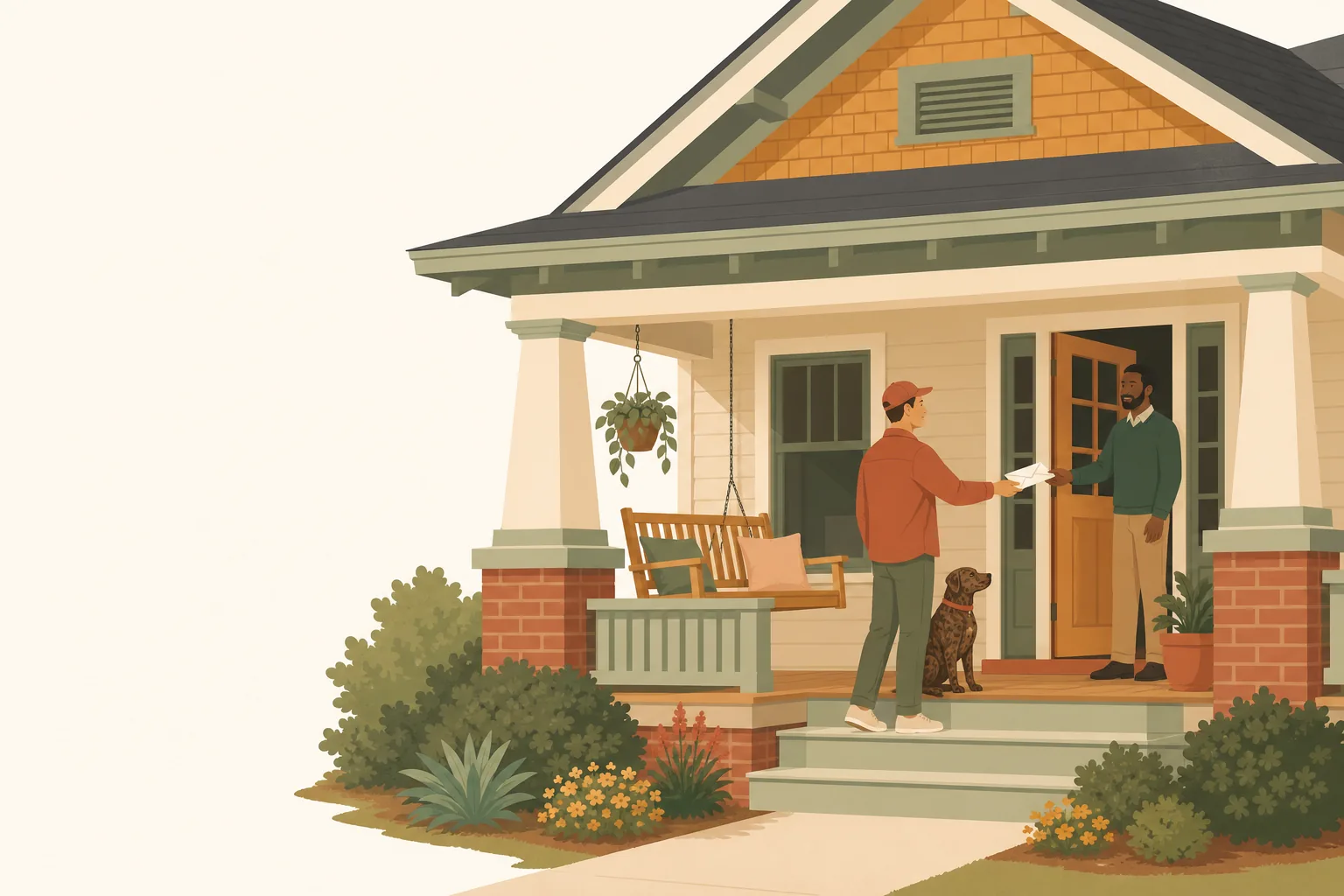
Most refusals are not a flat no. They are a question the housing provider is not allowed to ask, or a fee they are not allowed to charge. Here is the shape of a typical exchange in North Carolina, with the rule beside each reply.
A made-up exchange to show the rules, not a real tenant or landlord.
Pet fees and deposits
No North Carolina law bans a pet fee for an emotional support animal; the opposite is true. The landlord may charge a reasonable, nonrefundable fee for pets kept on the premises, with no dollar cap and no ESA exception (G.S. § 42-53). The only no-charge rules protect trained service animals: no extra compensation for the animal (G.S. § 168-4.4), and charging a fee for a service animal's use is a Class 3 misdemeanor (G.S. § 168-4.5). The 2023 bill that would have exempted support animals from the pet fee died in the Senate Rules Committee (H551), and HUD's no-fee guidance was withdrawn effective 17 September 2025. So ask, in writing, for pet charges to be waived as a reasonable accommodation (G.S. § 41A-4(f)(2)); the landlord weighs it case by case, and no statute obliges a yes. Where the state is strict is the deposit. Any refundable animal deposit is part of your security deposit, which is capped at two weeks' rent for a week-to-week tenancy, one and a half months' rent month to month, or two months' rent for anything longer (G.S. § 42-51(b)). The itemised accounting and balance are due within 30 days of move-out, nothing may be withheld for normal wear and tear, and a landlord's wilful failure to follow the deposit rules forfeits the right to keep any of it (G.S. §§ 42-52, 42-55). No statute addresses monthly pet rent.
Small landlords
North Carolina's State Fair Housing Act has no single-family-house exemption: the former carve-out was repealed in 1990 (G.S. § 41A-6(a)(6)). Only two kinds of rental escape the accommodation duty. The first is a housing accommodation in a building for not more than four families where the lessor or a member of the lessor's family lives. The second is a room or rooms in a private house, not a boarding house, where the lessor or a family member lives (G.S. § 41A-6(a)(1)–(2)). Religious organisations preferring their members, private clubs, single-sex dormitories and commercial real estate are the other exemptions, and none touches an ordinary rental. The federal Act lets off an owner of up to three single-family houses who rents without a broker (42 U.S.C. § 3603(b)(1)); state law does not, so for those renters the Human Relations Commission and state court are the only fair-housing route. Even an exempt landlord may not print or publish a discriminatory statement or advertisement (G.S. § 41A-6(a)).
If your landlord says no
Phone: 984-236-1850 (Inquiry line (984) 236-1919 · email hrc.complaints@oah.nc.gov) · File a complaint
Deadline: One year after the unlawful practice occurred (G.S. § 41A-7(b)). The online inquiry form is not a complaint; its own text says so. A complaint must be written and verified, and the respondent has 10 days to answer (G.S. § 41A-7(b)). The Commission must begin investigating within 30 days and reach a reasonable-grounds decision within 90 days or explain the delay in writing (G.S. § 41A-7(e)).
Court: A state-court suit needs a right-to-sue letter first. You get one after a no-grounds finding, within 10 days of a notice that conciliation failed, or on request 130 days after filing (G.S. § 41A-7(f), (i)). The suit must be brought within one year of the letter and can win an injunction, actual and punitive damages, costs and attorney's fees (G.S. § 41A-7(j)). A federal Fair Housing Act suit stays open for two years with no agency filing (42 U.S.C. § 3613(a)(1)(A)).
Retaliation: It is unlawful to coerce, intimidate, threaten or interfere with anyone exercising fair-housing rights (G.S. § 41A-4(e)). If a landlord files to evict you within 12 months of a good-faith attempt to enforce rights under State or federal law, you may raise retaliatory eviction as a defence (G.S. § 42-37.1(a)(4), (b)). No court has yet applied G.S. § 42-37.1 to an accommodation request, so treat it as a may, not a must.
The Commission is HUD's Fair Housing Assistance Program partner for the state, and HUD lists five local partner agencies: Charlotte-Mecklenburg, Durham, Greensboro, Orange County and Winston-Salem. Where a local body has equal or greater authority, the Commission hands the case over within 30 days (G.S. § 41A-7(c)). It has published nothing on the May 2026 HUD memo, so no one can promise you a Commission finding on an untrained animal.

Your envelope, item by item
Keep a dated copy of everything you send.
What to send your landlord
Three or four sentences. Say you have a disability, that your animal meets a disability-related need, and that you are asking for a reasonable accommodation to the no-pets rule under the State Fair Housing Act (G.S. § 41A-4(f)(2)). Name the animal and its species, ask in the same letter for pet charges to be waived, and keep a dated copy.
The signed letter from a clinician licensed in North Carolina. It states that you have a condition that substantially limits a major life activity, the standard in G.S. § 41A-3(3a), and that the animal meets a disability-related need. It shows the licence type, number and consultation date so the landlord can check them. It does not give a diagnosis.
A registry listing, an ID card, a vest, a renewal date or a form of the landlord's choosing. Nothing in G.S. Chapters 41A, 42 or 168 sets a letter format or an expiry date. The only tag the state issues is the free, voluntary DHHS tag for trained service animals, which an ESA cannot get (G.S. § 168-4.3). If the landlord wants more, offer to have the clinician confirm the letter.
No North Carolina statute sets a response deadline, so ask for a written answer within a reasonable time and chase it in writing. If the answer is no, note the date: you have one year from then to file with the Human Relations Commission (G.S. § 41A-7(b)). If a pet fee is charged, ask whether it is refundable; a refundable one sits inside the deposit cap (G.S. § 42-51(b)).
If your housing provider questions the letter, your clinician responds directly at no extra cost.
North Carolina renters by city
The housing right and the complaint route are the same in Charlotte, Raleigh, Durham, Greensboro, Winston-Salem, Fayetteville, Cary and Wilmington, because both come from state statute. The State Fair Housing Act applies in every county, and the North Carolina Human Relations Commission in Raleigh takes complaints from any renter in the state, by email or post, within one year (G.S. § 41A-7(b)). Four of these cities also have a local fair-housing agency that HUD lists as a partner, which may take a case in its own area (G.S. § 41A-7(c)); see the notes below. Because our clinicians licensed in North Carolina work by video or phone, a renter in Wilmington and one in Winston-Salem follow the same three steps: a free screening, one live consultation, and if you qualify a signed PDF usually within 24 to 48 hours. Asheville and Hickory follow the same statewide rules. Military families renting off-post around Fayetteville use the same statute and the same agency as everyone else. Students in campus housing at App State or NC State go through the university's own ESA-documentation process rather than a vendor letter. One caution for every city: an ESA has no right to enter shops, restaurants or hotels, because public access under G.S. § 168-4.2(a) belongs to a trained service animal.
Myths in North Carolina
North Carolina passed an emotional support animal law, House Bill 796, and landlords have to follow it.
FactIt never became law. H796 (2019) passed the House 115 to 1 and then died in the Senate Rules Committee; H551 and S553 (2023) ended in the same committee; nothing was filed in 2025 or 2026. The state's only housing rule for an ESA is the State Fair Housing Act's accommodation clause (G.S. § 41A-4(f)(2)), which never uses the words emotional support.
North Carolina landlords cannot charge pet fees, pet rent or deposits for an emotional support animal.
FactWrong. State law says the landlord may charge a reasonable, nonrefundable fee for pets, with no cap and no ESA exception (G.S. § 42-53). The no-charge rules protect trained service animals only (G.S. §§ 168-4.4, 168-4.5). A fee waiver for an ESA is a reasonable-accommodation request (G.S. § 41A-4(f)(2)), decided case by case, and a refundable deposit is capped and comes back within 30 days (G.S. §§ 42-51(b), 42-52).
North Carolina keeps an ESA registry, and without a registration certificate or ID card no landlord will take the letter.
FactNo. The only animal registry the state runs is a free, voluntary one for trained service animals, and DHHS says emotional-support dogs do not qualify for it (G.S. § 168-4.3). No statute gives an online registration, certificate, ID card or vest any legal effect; what a landlord may act on is reliable information of a handicapping condition and a disability-related need (G.S. §§ 41A-3(3a), 41A-4(f)(2)).
Task-trained dogs are a different document. If your dog performs trained tasks for a psychiatric disability, read about the psychiatric service dog (PSD) letter online, written after a real consultation.
Typical competitor price $159 — you save up to $60
The reasonable-accommodation letter you give your landlord, after a live clinical evaluation.
Both letters from one course of care, including the consultations for each.
For people who already have housing sorted and need psychiatric service dog documentation only.
Signed PDF within 24 to 48 hours of your consultation. Same-day evaluations are often available for early bookings. Read the guarantee and refund terms.
Why this letter holds up

Read the exact terms. Money-back guarantee: full refund if you do not qualify, and a full refund if your housing provider refuses the letter.
★★★★★I had a really positive experience from start to finish. The process was smooth, and I felt comfortable sharing everything without feeling rushed or judged. The questions were straightforward and easy to answer, and I really appreciated how respectful and understanding everyone was throughout the process. Having the opportunity to speak with a licensed professional afterward was also very helpful and added a lot of value to the experience. Overall, I’m very satisfied with the service
Hamza Khalid · Trustpilot, 2026-09
★★★★★Great service!! 5 stars hands down!
Jen Khan · Trustpilot, 2026-09
Read all Pet Support Letter reviews on Trustpilot. We show our own reviews only, word for word.
North Carolina FAQ
Book a live video or phone evaluation with a clinician licensed in North Carolina. The state sets no waiting period, session count or in-person rule; it requires a licence held here, because practice happens where you sit (G.S. § 90B-4(b); § 90-331). If the clinician finds a qualifying condition and a disability-related need, the signed PDF usually follows within 24 to 48 hours. ESA here means emotional support animal, not the state's ESA+ education savings account.
Yes, if they are willing and licensed here. No North Carolina statute names who may write the letter, so any health professional licensed in the state who actually evaluates you can do it, whether physician, psychologist, clinical social worker or counsellor (G.S. § 90B-4(b); § 90-331). Many treating doctors decline because it sits outside their practice. If yours says no, or you have no treating provider, a video evaluation with a licensed mental-health clinician is the other route.
Some do, and the law lets them ask for reliable information of a handicapping condition and a disability-related need when neither is obvious (G.S. §§ 41A-3(3a), 41A-4(f)(2)). They can verify the licence on the state board's public look-up, so the letter shows the licence type, number and consultation date. Our clinician confirms the letter if a landlord asks. No North Carolina statute makes a letter expire; "valid for 12 months" is a vendor's policy, not the state's law.
No state programme places emotional support dogs, and no law here requires a particular animal. A dog you own or adopt from a shelter in Charlotte or Wilmington can be your ESA if a clinician finds you qualify. What costs money is the clinical evaluation, $99, paid at checkout before the consultation, with a full refund within 7 days if the clinician finds you do not qualify. A free letter downloaded from a website is not a clinician's finding.
State law sets no species rule: the accommodation clause speaks of rules, policies, practices and services, not of dogs or cats (G.S. § 41A-4(f)(2)), and even the trained-animal definition "is not limited to a dog" (G.S. § 14-163.1(a)(1)). The limit is reasonableness. A landlord may refuse a tenancy that would be a direct threat or cause substantial physical damage (G.S. § 41A-6(b)), and an apartment is not a stable. Ask the clinician whether the animal meets your need.
$99 for a housing letter, $149 together with a psychiatric service dog letter, or $79 for a PSD letter and consultation on its own. The consultation and landlord verification support are included, and the price is the same across every state.
Nearby states and resources
Sources
General information, not legal advice. Last reviewed 2026-10-13 by Darren Rafel, LCSW. Statutes change; we re-check each state page and record the date above.
Two-minute screening, confidential, no card. You will see your exact state timeline before anything is charged.
Start the free screening HIPAA-compliant intake · Licensed clinicians · Money-back guarantee: full refund if you do not qualify, and a full refund if your housing provider refuses the letter.