




Step 1
Free screening online, with no card. A few questions about your housing situation and why you are seeking the letter go to the clinician ahead of your consultation.
Wisconsin · WI
Yes. Wisconsin protects emotional support animals in housing by its own statute, Wis. Stat. § 106.50(2r)(br), and sets no waiting period, session count or in-person rule. The law does require that documentation of your need come from a health professional licensed or certified in Wisconsin, so your live video or phone consultation is with a clinician licensed in Wisconsin. If you qualify, the signed PDF usually arrives within 24 to 48 hours. The price is $99.
a landlord may ask for: proof of disability and proof of need
Wis. Stat. § 106.50(2r)(br)2.on which a landlord may lawfully turn the animal down
Wis. Stat. § 106.50(2r)(br)4.minimum civil forfeiture for misrepresenting a disability or ESA need
Wis. Stat. § 106.50(2r)(br)5.to file with the Equal Rights Division or to sue in circuit court
Wis. Stat. § 106.50(6)(a)1., (6m)(b)Wisconsin, with the capital marked
Wisconsin at a glance
Each answer is one line, with the section of Wisconsin law it comes from. The detail is further down the page.
Yes, and it names the animal. Wis. Stat. § 106.50(2r)(br), created by 2017 Wis. Act 317 and in force since 18 April 2018, makes it discrimination to refuse to rent to you, evict you, require extra compensation as a condition of continued residence, or harass you because you keep an emotional support animal you need for a disability. The statute defines an ESA as an animal that is not trained to perform tasks (§ 106.50(1m)(im)), so the right does not depend on training.
Wis. Stat. § 106.50(1m)(im), (2r)(br)1.; 2017 Wis. Act 317No. The statute sets no minimum relationship length, no session count, no in-person requirement and no expiry date for the letter. A bill adding a 30-day patient-provider rule, 2025 Assembly Bill 366, passed both houses but was vetoed on 5 December 2025, and the Assembly's override attempt failed on 13 May 2026.
Wis. Stat. § 106.50(1m)(mx), (2r)(br); 2025 AB 366 historyA licensed health professional: a physician, psychologist, social worker or other health professional who is licensed or certified in Wisconsin and acting within the scope of that licence. It does not have to be a therapist, but it does have to be a Wisconsin credential; a letter from a clinician licensed only in another state does not meet the statute on its face.
Wis. Stat. § 106.50(1m)(mx)Not pet rent or a recurring pet fee: requiring extra compensation as a condition of continued residence because of the animal is discrimination. The statute does not expressly mention a one-time move-in deposit, so ask for it to be waived rather than assuming it is barred. You remain liable for sanitation and for damage the animal causes.
Wis. Stat. § 106.50(2r)(br)1., 3.Only on four grounds. You are not disabled or have no disability-related need; you did not provide the documentation requested; the accommodation would be an undue financial and administrative burden or a fundamental alteration; or the specific animal poses a direct threat or would cause substantial physical damage that no other reasonable accommodation can reduce. A no-pets policy is not on the list.
Wis. Stat. § 106.50(2r)(br)4.No. A tenant who intentionally misrepresents a disability or the need for an ESA to obtain housing forfeits at least 500 dollars, a civil penalty with no jail. A licensed health professional who misrepresents a patient's disability or need forfeits at least 500 dollars as well. The 2025 bill that would have added a public-places misrepresentation offence failed.
Wis. Stat. § 106.50(2r)(br)5.–6.The Equal Rights Division of the Department of Workforce Development, within one year of the act, online or through its Madison and Milwaukee offices. Or sue in circuit court within one year; that clock pauses while an ERD complaint is pending, and only a court can award punitive damages. Wisconsin has no HUD partner agency, so an ERD filing is not also a HUD filing.
Wis. Stat. § 106.50(6)(a)1., (6)(h)1., (6m)Wisconsin law
Wisconsin's Open Housing Law has carried its own emotional support animal paragraph since 18 April 2018 (Wis. Stat. § 106.50(2r)(br), created by 2017 Wis. Act 317). It defines an ESA as an animal that provides comfort or companionship and is not trained to perform tasks (§ 106.50(1m)(im)), so the right does not depend on training. If you have a disability and a disability-related need for the animal, a landlord commits discrimination by refusing to rent to you, evicting you, requiring extra compensation as a condition of continued residence, or harassing you because you keep it (§ 106.50(2r)(br)1.). The landlord may request two things: reliable documentation of the disability, and reliable documentation of the need from a licensed health professional, meaning a physician, psychologist, social worker or other health professional licensed or certified in Wisconsin and acting within scope (§ 106.50(1m)(mx), (2r)(br)2.). A refusal is lawful on four grounds only: no disability or need, documentation not provided, undue financial and administrative burden or fundamental alteration, or a specific animal that poses a direct threat or would cause substantial damage that no other accommodation can reduce (§ 106.50(2r)(br)4.). Coverage reaches owner-occupied single-family homes; only roommate selection is excluded (§ 106.50(1), (5m)(em)). Enforcement runs through the Equal Rights Division or circuit court, each within one year (§ 106.50(6)(a)1., (6m)(b)).
Source: Wis. Stat. § 106.50(2r)(br) (2017 Wis. Act 317, in force 18 April 2018). This is general information, not legal advice.
The federal Fair Housing Act still recognises the accommodation, and you can still enforce it in court. Since May 2026, HUD itself has stopped pursuing complaints about untrained emotional support animals, so in practice your protection comes from Wisconsin law and the Wisconsin Department of Workforce Development's Equal Rights Division.
“is not trained to perform tasks for the benefit of an individual with a disability”
Federal vs Wisconsin
| Topic | Federal (Fair Housing Act) | Wisconsin |
|---|---|---|
| Fees and deposits | The Fair Housing Act text contains no fee rule, and HUD's no-fee guidance was withdrawn on 17 September 2025; a fee waiver is requested as part of the accommodation. | Requiring extra compensation as a condition of continued residence because of an ESA is discrimination, which covers pet rent and recurring fees (Wis. Stat. § 106.50(2r)(br)1.). A one-time move-in deposit is not expressly addressed, and you remain liable for sanitation and damage (§ 106.50(2r)(br)3.). |
| Documentation | The request must be a reasonable accommodation necessary for equal use of the dwelling (42 U.S.C. § 3604(f)(3)(B)); no federal statute sets a letter format. | The landlord may request reliable documentation of the disability and of the disability-related need, the second from a health professional holding a Wisconsin licence or certificate (Wis. Stat. § 106.50(1m)(mx), (2r)(br)2.). No form, registry, prescription or validity period exists. |
| Timing | No federal response deadline and no federal waiting period. | No landlord response deadline. No waiting period, session count or 30-day relationship before the clinician's letter; the 2025 bill proposing one failed (Wis. Stat. § 106.50(2r)(br); 2025 AB 366). |
| Who may write | Federal law does not say who may write the letter. | A physician, psychologist, social worker or other health professional who is licensed or certified in Wisconsin and acting within the scope of that licence (Wis. Stat. § 106.50(1m)(mx)). |
| Exemptions | Owner-occupied buildings of up to four units, and single-family homes sold or rented by an owner of three or fewer houses (42 U.S.C. § 3603(b)). | None for disability. Owner-occupied single-family residences are expressly covered; only a person's choice of roommate is excluded (Wis. Stat. § 106.50(1), (5m)(em)). |
| Where to file | HUD, which since May 2026 pursues only complaints about trained animals, or federal court. | The Equal Rights Division of the Department of Workforce Development, which is not a HUD fair-housing partner agency, so there is no dual filing; or circuit court directly, without an ERD complaint first (Wis. Stat. § 106.50(1s), (6m)). |
| Deadline | One year to file with HUD (42 U.S.C. § 3610); two years to sue in federal court (42 U.S.C. § 3613(a)(1)(A)). | One year to file with ERD (Wis. Stat. § 106.50(6)(a)1.); one year to sue in circuit court, paused while an ERD complaint is pending (§ 106.50(6m)(b)). |
Swipe sideways to see the whole table.
Your timeline in Wisconsin
Wisconsin sets no waiting period, so the timeline here is set by the clinical evaluation and not by a calendar (Wis. Stat. § 106.50(2r)(br); the 30-day bill, 2025 AB 366, failed). Three steps. The consultation is live because the clinician forms a personal opinion on your disability and your need, and answers for it under § 106.50(2r)(br)6.
Free screening online, with no card. A few questions about your housing situation and why you are seeking the letter go to the clinician ahead of your consultation.
Checkout, then a live video or phone consultation with a clinician licensed in Wisconsin. The clinician forms a personal opinion on the two things a landlord may ask about: whether you have a disability and whether you have a disability-related need for the animal (Wis. Stat. § 106.50(2r)(br)2.). Not everyone qualifies.
If you qualify, the signed PDF usually arrives within 24 to 48 hours of the consultation. There is no 30-day wait and no expiry date in Wisconsin law. If the clinician finds you do not qualify, the fee is refunded under our refund terms.
Housing
Under the federal Fair Housing Act (42 U.S.C. § 3604(f)(3)(B)) and Wisconsin's own fair-housing law, a housing provider must consider a reasonable-accommodation request for an assistance animal, including where pets are prohibited. Each line below carries the section it comes from.
What they may do
What they may not do
Illustrative exchange
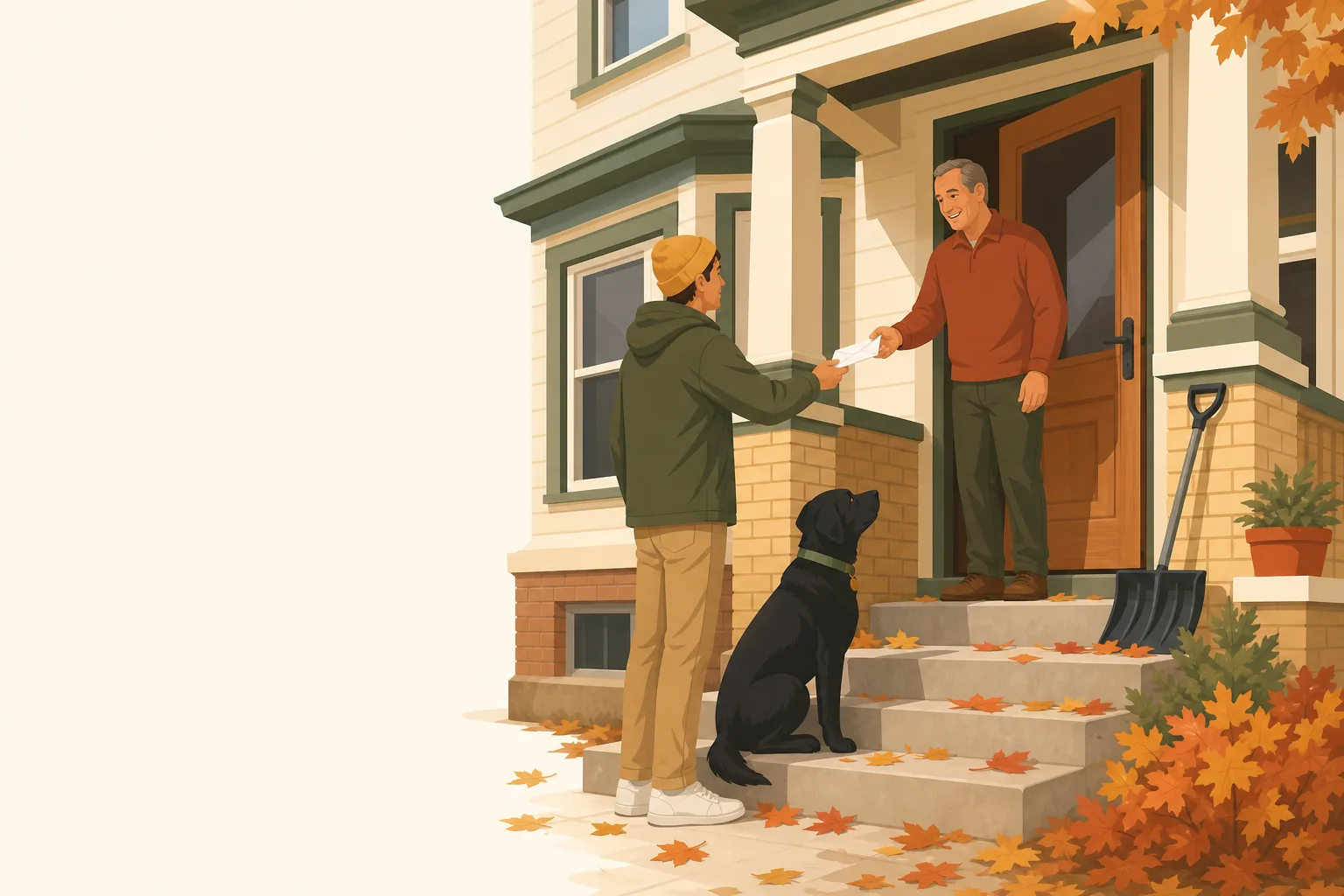
Most refusals are not a flat no. They are a question the housing provider is not allowed to ask, or a fee they are not allowed to charge. Here is the shape of a typical exchange in Wisconsin, with the rule beside each reply.
A made-up exchange to show the rules, not a real tenant or landlord.
Pet fees and deposits
Wisconsin law makes it discrimination to require extra compensation from you as a condition of continued residence because you keep an ESA; that reaches monthly pet rent and recurring pet fees (Wis. Stat. § 106.50(2r)(br)1.). The statute does not expressly address a one-time move-in pet deposit, and no court or agency ruling on the point was found, so do not assume one is barred; ask for it to be waived as part of your accommodation request. You stay liable for sanitation and for any damage the animal causes (§ 106.50(2r)(br)3.), which can come out of your ordinary security deposit. Wisconsin sets no cap on deposit amounts; the landlord must return the deposit within 21 days, may not deduct for normal wear and tear, and must itemise what is kept (Wis. Stat. § 704.28(3)–(4); ATCP 134.06(4)).
Small landlords
There is no small-landlord exemption for disability in Wisconsin. The Legislature wrote the Open Housing Law to cover single-family residences that are owner-occupied (Wis. Stat. § 106.50(1)), so the owner living downstairs in a duplex, or renting out one house, is bound by the ESA paragraph. The only carve-out is a person's choice of whom to share their own dwelling unit with, and even that ends at residences occupied by more than five people (§ 106.50(5m)(em)). The old allergy exception for owner-occupied rentals was repealed in 2018 (2017 Wis. Act 317).
If your landlord says no
Phone: 608-266-6860 · File a complaint
Deadline: One year from the discriminatory act, or from the day you learned of it (Wis. Stat. § 106.50(6)(a)1.). File online through the Civil Rights Complaint Form with a MyWisconsin ID, or mail paper form ERD-10240-E to the Madison office (PO Box 8928, Madison WI 53708) or the Milwaukee office (819 N 6th St, Room 723; 414-227-4384).
Court: You may instead sue in circuit court within one year of the violation; the clock pauses while an ERD complaint is pending (Wis. Stat. § 106.50(6m)(b)). A court can award injunctions, actual and punitive damages, costs and attorney fees; the ERD hearing examiner cannot order punitive damages (§ 106.50(6)(h)1., (6m)(a)).
Retaliation: Harassing you because you keep the animal, or coercing, intimidating, threatening or interfering with you for exercising a right under the Open Housing Law, is itself unlawful (Wis. Stat. § 106.50(2r)(br)1., (2)(j)).
Wisconsin has no HUD fair-housing partner agency, so an ERD complaint is not also a HUD complaint; a renter who wants a federal case files separately with HUD within one year. If the housing is inside Madison's city limits, ERD also refers the complaint to the city's Equal Opportunities Division, which takes housing complaints within 365 days (608-266-4910).

Your envelope, item by item
Keep a dated copy of everything you send.
What to send your landlord
Two or three sentences asking for a reasonable accommodation for an emotional support animal under Wis. Stat. § 106.50(2r)(br). Name the animal's species and keep a dated copy. The statute protects you at application, during the lease and against eviction, so the request can go in at any stage.
The signed PDF from your clinician licensed in Wisconsin. It documents, first, that you have a disability as the statute defines it and, second, your disability-related need for the animal, which is exactly the pair a landlord may request (Wis. Stat. § 106.50(2r)(br)2.). It identifies the clinician and the Wisconsin licence or certificate they hold, which a landlord can check on the state's LicensE look-up; it does not name a diagnosis.
No prescription, no registry number, no certificate, no house form and no letter dated within the past twelve months. None of these exists in Wisconsin law; the bill that would have added a prescription requirement was vetoed on 5 December 2025 and the veto was sustained on 13 May 2026 (Wis. Stat. § 106.50(2r)(br)2.; 2025 AB 366).
Wisconsin sets no deadline for the landlord's answer, so ask for a reply in writing. A refusal is lawful only on the four statutory grounds (Wis. Stat. § 106.50(2r)(br)4.). If the answer is no, or silence drags on, note the date: you have one year to file with the Equal Rights Division or to sue (§ 106.50(6)(a)1., (6m)(b)).
If your housing provider questions the letter, your clinician responds directly at no extra cost.
Wisconsin renters by city
The ESA paragraph is state law and the Equal Rights Division is a state agency, so a renter in Kenosha, Racine or Appleton has exactly the rights of one in Milwaukee, Madison or Green Bay (Wis. Stat. § 106.50(1s)). ERD takes complaints from every county through its online Civil Rights Complaint Form, or at its Madison (608-266-6860) and Milwaukee (414-227-4384) offices, within one year (§ 106.50(6)(a)1.). Our clinicians licensed in Wisconsin consult by video or phone, so the timeline is the same in Waukesha and Eau Claire: free screening, a live consultation, and if you qualify a signed PDF that usually arrives within 24 to 48 hours. Madison adds a second door: complaints about housing inside the city are also referred to the Equal Opportunities Division, which takes them within 365 days (608-266-4910).
Myths in Wisconsin
Wisconsin has no state ESA law, so only HUD rules apply.
FactWrong since 18 April 2018. Wis. Stat. § 106.50(2r)(br) names emotional support animals, defines them as animals not trained to perform tasks (§ 106.50(1m)(im)), and lists four acts of discrimination against a renter who keeps one. Because the state right never borrowed from HUD guidance, HUD's May 2026 enforcement retreat changes nothing in a Wisconsin case.
A fake ESA letter in Wisconsin means a fine of up to 10,000 dollars and jail, so a registry listing is the safe choice.
FactThere is no jail and no registry. A tenant who intentionally misrepresents a disability or ESA need to get housing forfeits at least 500 dollars, a civil penalty (Wis. Stat. § 106.50(2r)(br)5.). Wisconsin has no offence for passing a pet off as a service animal; the 200- and 500-dollar fines vendors quote were in a bill that died. The 10,000-dollar figure is the cap on forfeitures against a landlord who discriminates (§ 106.50(6)(h)2.).
Wisconsin now requires a 30-day relationship with your provider, a prescription, and yearly renewal.
FactNone of that is law. 2025 Assembly Bill 366 would have added a 30-day patient-provider rule and let landlords demand a prescription; the Governor vetoed it on 5 December 2025, the Assembly's override failed on 13 May 2026, and the Senate companion SB 327 died on 23 March 2026. Current law sets no relationship length, session count, in-person rule or validity period (Wis. Stat. § 106.50(1m)(mx), (2r)(br)).
Task-trained dogs are a different document. If your dog performs trained tasks for a psychiatric disability, read about the a psychiatric service dog letter, written after a real consultation.
Typical competitor price $159 — you save up to $60
The reasonable-accommodation letter you give your landlord, after a live clinical evaluation.
Both letters from one course of care, including the consultations for each.
For people who already have housing sorted and need psychiatric service dog documentation only.
Signed PDF within 24 to 48 hours of your consultation. Same-day evaluations are often available for early bookings. Read the guarantee and refund terms.
Why this letter holds up

Read the exact terms. Money-back guarantee: full refund if you do not qualify, and a full refund if your housing provider refuses the letter.
★★★★★I had a really positive experience from start to finish. The process was smooth, and I felt comfortable sharing everything without feeling rushed or judged. The questions were straightforward and easy to answer, and I really appreciated how respectful and understanding everyone was throughout the process. Having the opportunity to speak with a licensed professional afterward was also very helpful and added a lot of value to the experience. Overall, I’m very satisfied with the service
Hamza Khalid · Trustpilot, 2026-09
★★★★★Great service!! 5 stars hands down!
Jen Khan · Trustpilot, 2026-09
Read all Pet Support Letter reviews on Trustpilot. We show our own reviews only, word for word.
Wisconsin FAQ
Yes, but only on four statutory grounds (Wis. Stat. § 106.50(2r)(br)4.). You have no disability or no disability-related need; you did not provide the documentation requested; the animal would be an undue financial and administrative burden or a fundamental alteration; or the specific animal poses a direct threat or would cause substantial damage that no other accommodation can reduce. The statute lists no breed, size or no-pets ground, and a live-in landlord is covered (§ 106.50(1)).
Two things, both in Wis. Stat. § 106.50: a disability, an impairment that substantially limits one or more major life activities (§ 106.50(1m)(g)), and a disability-related need for the animal. A landlord may ask for reliable documentation of each, the need part from a health professional holding a Wisconsin licence (§ 106.50(1m)(mx), (2r)(br)2.). No registry, prescription, training, waiting period or renewal exists. The right is housing-only; public places admit only animals trained to do work or tasks (§ 106.52(1)(fm)).
Have a live evaluation with a health professional holding a Wisconsin licence, as the statute requires for the documentation a landlord may request (Wis. Stat. § 106.50(1m)(mx)). Screening is free with no card; the price is $99, paid at checkout before your video or phone consultation with a clinician licensed in Wisconsin. If you qualify, the signed PDF usually arrives within 24 to 48 hours. A download with no evaluation is not reliable documentation under § 106.50(2r)(br)2.
Many do, and Wisconsin law lets them. A landlord may request reliable documentation of your disability and of your disability-related need, the second from a licensed health professional (Wis. Stat. § 106.50(2r)(br)2.), and may check the writer's credential on the state's LicensE look-up. They may not demand a prescription, registry entry, certificate or house form; the statute names none of these. If a landlord questions your letter, your clinician confirms it as part of our complimentary verification support.
A disability as Wisconsin defines it: a physical or mental impairment that substantially limits one or more major life activities, a record of one, or being regarded as having one (Wis. Stat. § 106.50(1m)(g); Kitten v. DWD, 2002 WI 54). You also need a disability-related need the animal meets. A clinician licensed in Wisconsin makes that judgment after a live consultation, and not everyone qualifies; a diagnosis on its own does not settle it.
You do not train, register or certify the dog; the letter is about you. Wisconsin law defines an emotional support animal as one that provides comfort or companionship and is not trained to perform tasks (Wis. Stat. § 106.50(1m)(im)). Your dog becomes an emotional support dog through a clinician's finding that you have a disability and a disability-related need, documented by a health professional licensed in Wisconsin (§ 106.50(1m)(mx)). It gains no public-access rights.
$99 for a housing letter, $149 together with a psychiatric service dog letter, or $79 for a PSD letter and consultation on its own. The consultation and landlord verification support are included, and the price is the same across every state.
Nearby states and resources
ESA letter rules, timeline and cost in Michigan.
ESA letter Michigan →Page coming soon. The hub lists every state and which pages are live.
ESA letter rules by state →Page coming soon. The hub lists every state and which pages are live.
ESA letter rules by state →Sources
General information, not legal advice. Last reviewed 2026-10-08 by Darren Rafel, LCSW. Statutes change; we re-check each state page and record the date above.
Two-minute screening, confidential, no card. You will see your exact state timeline before anything is charged.
Start the free screening HIPAA-compliant intake · Licensed clinicians · Money-back guarantee: full refund if you do not qualify, and a full refund if your housing provider refuses the letter.